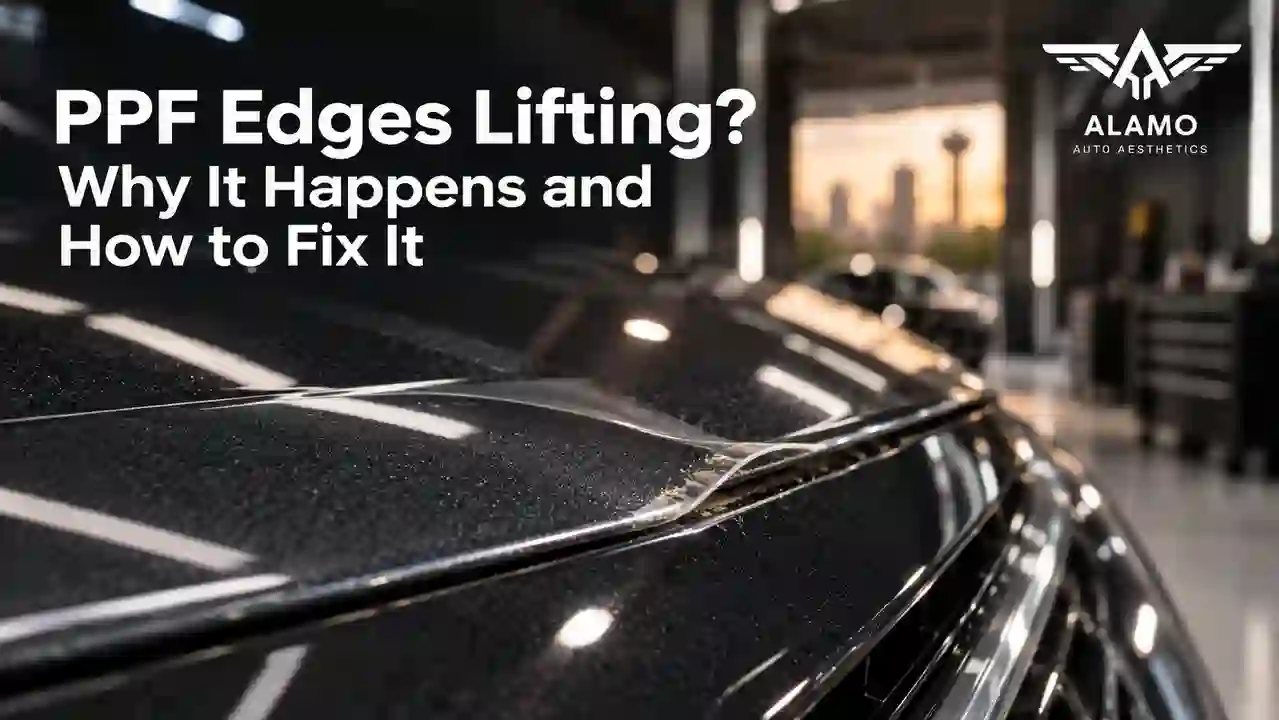
A lifted corner on the hood is usually the first sign of PPF edges lifting. Left alone, dirt works under the film and the adhesive bond fails. A small fix then turns into a full panel replacement. Alamo Auto Aesthetics inspects PPF installation in San Antonio on hundreds of vehicles each year. Edge lifting is one of the most common calls technicians field. This guide explains why it happens, how to tell if a lift is still fixable, and how to prevent it.
Key Takeaways
- PPF edge lifting usually starts from poor surface prep, weak heat sealing, or budget film, not just age.
- A “clean” lift with no dirt trapped underneath is often repairable; a contaminated lift usually is not.
- Small, clean lifts under about 1 to 2 inches can sometimes be reheated and resealed at home.
- Correct washing habits and a proper cure window prevent most edge lifting before it starts.
- San Antonio’s summer heat speeds up existing weak spots, which makes early detection especially important locally.
What Does PPF Edge Lifting (and Peeling) Actually Look Like?
PPF edge lifting, edge peeling, and corners lifting describe the same problem. The film’s perimeter separates from the paint underneath it. Early-stage lifting looks like a faint shadow line or a slightly raised seam that catches a fingernail.
Left untreated, the seam becomes a visible ridge that traps dirt and water. Corners tend to fail before flat edges since they carry the most stretch. Door edges, mirror caps, and bumper corners are the panels installers see most often.
Once a corner starts curling, the exposed adhesive line spreads fast. Some drivers simply say the film stopped sticking, or point to small bubbles along a cut line. All of these describe the same issue at different stages, and the fix is the same.
Why PPF Edges Lift, Peel, or Stop Sticking in San Antonio
Most edge lifting traces back to one of six causes. Installers can usually tell which one from how and where the lift appears. Alamo Auto Aesthetics technicians check this list during every warranty inspection.
Poor Surface Preparation
Wax, polish residue, or fingerprints on the paint stop adhesive from bonding fully. This is the most common cause of early lifting industry-wide.
Weak Heat Sealing During Installation
Edges need firm, even heat to activate the adhesive fully. Rushed squeegee work leaves cold spots that separate within weeks.
Budget Film and Adhesive Quality
Lower-cost films use weaker adhesives that soften under heat. Premium brands like STEK, 3M, KPMF, and Avery Dennison hold their bond longer.
Overstretching on Curved Panels
Pulling film too tight around a curve stores tension in the material. That tension slowly relaxes and pulls the edge away from the paint.
Friction From Trim and Contact Points
Edges rubbing against weatherstripping or door handles wear loose faster than flat panels. Repeated contact eventually breaks the adhesive seal.
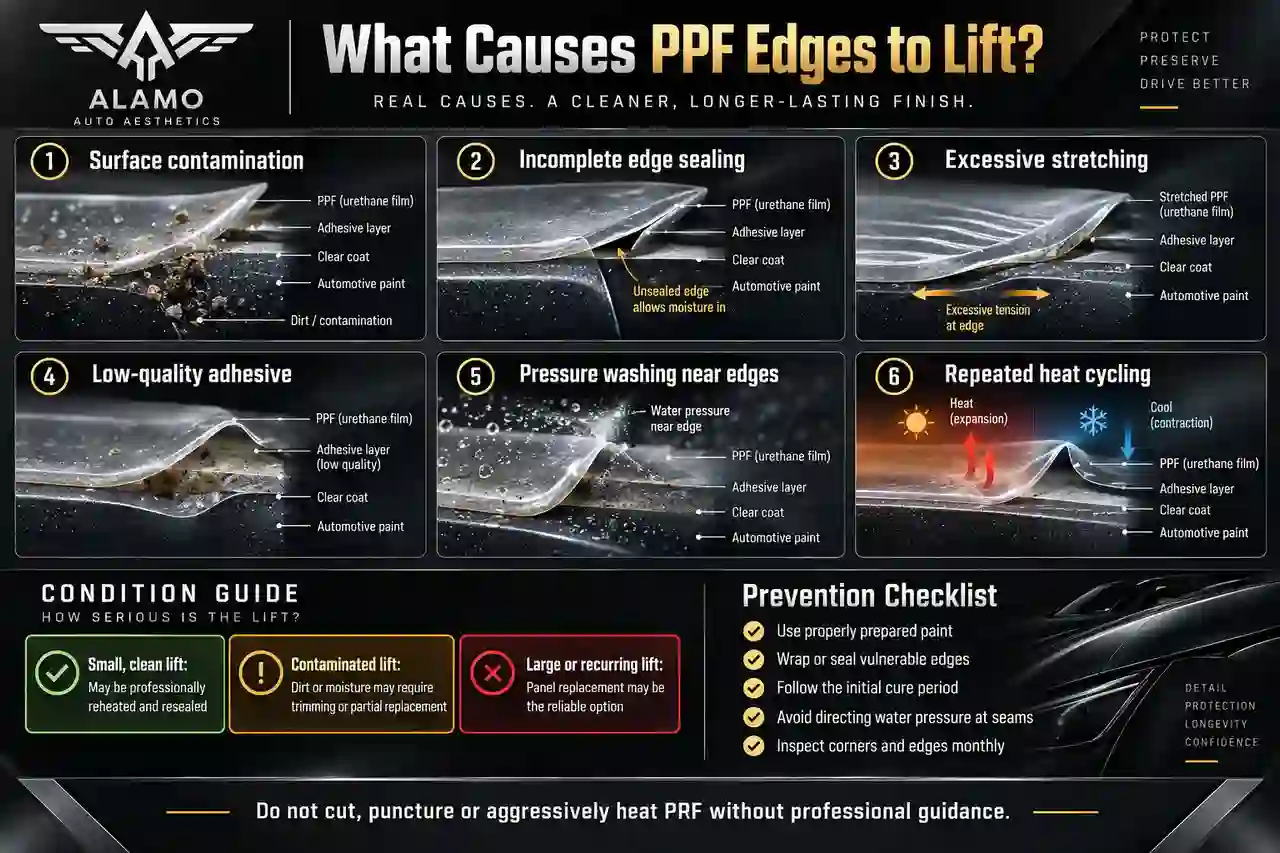
Heat and UV Cycling
Film expands in the heat and contracts overnight. Repeated cycling stresses any spot where the bond was already weak, especially outdoors through a San Antonio summer.
Most of these causes point back to installation quality, not the film itself. Vehicle owners who spot lifting within the first few months should check for other signs of a bad PPF installation. Doing so rules out installer error before blaming the film.
How to Spot Edge Lifting Before It Spreads
Monthly inspection catches lifting while it is still a five-minute fix. Run a fingertip along hood edges, bumper corners, mirror caps, and door edges. Feel for a raised seam or a spot that catches a fingernail.
A faint shadow line, visible mostly in direct sunlight, is often the earliest sign. Small ridges that collect dust or water spots come next. A corner that visibly curls away from the paint follows soon after.
Panels exposed to the most wind, road spray, and sun tend to show problems first. The table below breaks down which panels to check most closely.
| Panel | Why It Lifts First |
| Hood leading edge | Constant airflow and the highest UV exposure on the vehicle |
| Front bumper corners | Sharpest curves plus the most stone and road debris impact |
| Mirror caps | Small surface area with tight wrap points around the housing |
| Door edges | Repeated friction from opening against curbs, carts, and other vehicles |
| Rear bumper and trunk lip | Road spray and standing water collect right at the seam |
Can You Fix a Lifted PPF Edge Yourself, or Does It Need a Pro?
Small, clean lifts are sometimes fixable without professional tools. A simple test decides which category a lift falls into. Try it before reaching for a heat gun.
Press a fingertip on the raised edge for the fastest check. A clean flatten-back with no grit underneath means the bond is likely salvageable. Dirt, moisture, or a hazy line underneath means contamination has already broken the seal.
What a DIY Fix Requires
- Isopropyl alcohol (70 percent or higher) and a microfiber cloth
- A hair dryer or heat gun set to its lowest setting
- A soft plastic squeegee, or a credit card wrapped in microfiber
- Patience for a full 24 to 48 hour cure afterward
Step-by-Step DIY Fix for Small, Clean Lifts
- Clean the lifted area and surrounding film with isopropyl alcohol, then dry it completely.
- Confirm no dirt or moisture is trapped underneath using the fingertip test above.
- Apply gentle, even heat to the lifted section from about 6 inches away, moving constantly.
- Once the film softens slightly, press it down firmly with the squeegee, working from the center outward.
- Hold light, even pressure for 30 to 60 seconds, then let it cure 24 to 48 hours before washing.
When to Stop and Call a Professional
A lift longer than 1 to 2 inches signals a bigger problem. So does visible dirt under the film, or a second failed DIY attempt. Alamo Auto Aesthetics offers free inspections for exactly this reason. A five-minute look under good lighting settles the question faster than guesswork at home.
| Situation | Best Approach |
| Lift under 1-2 inches, no visible dirt | DIY reheat and reseal often works |
| Dirt, moisture, or discoloration underneath | Professional repair required; the film is contaminated |
| Multiple panels affected at once | Professional inspection to check for an installation-wide issue |
| Lift returns after a DIY fix | Professional repair; likely a deeper adhesive or install problem |
| Film still under installer or manufacturer warranty | Contact the installer before attempting a DIY repair |
Professional Repair Options and What They Cost in San Antonio
Professional repair falls into one of three tiers. Edge trimming and resealing handles small, isolated lifts. Partial or full panel replacement covers larger or repeated failures.
Cost depends on the tier and the affected panel. Bumpers and hoods take more film than a mirror cap. Installs backed by a 10-year warranty often cover lifting tied to an install defect at no extra charge.
Vehicle owners weighing a full reinstall against a smaller repair have options. It helps to review what a professional repair or reinstall costs in San Antonio before booking an inspection.
How to Prevent PPF Edge Lifting Year-Round in San Antonio
Prevention starts before installation, not after. Requesting tucked or wrapped edges removes the job’s weakest point. No raw edge is left for dirt or moisture to reach.
A ceramic edge sealant applied along cut lines adds a second barrier against water and grime. It will not fix an existing lift. It does slow contamination on edges that are still bonded correctly.
Washing habits matter just as much as the install itself. Automatic brush washes are the fastest way to peel a marginal edge loose. The right way to wash a car with PPF covers pH-neutral soap, hand washing, and the recommended cure window.
Does Ceramic Coating Help Prevent PPF Edges From Lifting?
Ceramic coating applied over PPF adds a slick, hydrophobic layer on top of the film. It does not replace proper edge sealing or tucked installation. It does make edges easier to clean and less likely to trap grime.
Water and dirt bead off rather than sitting against a raised seam. That matters most on high-exposure panels like the hood and front bumper. Fewer contaminants near an edge mean less risk of a small lift turning into a bigger repair.
Ceramic coating is a maintenance layer, not a fix for existing lifting. Vehicle owners considering both services often pair PPF with a ceramic top coat for easier upkeep. The combination extends the life of a properly installed edge.
Why San Antonio’s Heat and Sun Make Prevention Even More Important
San Antonio spends much of the summer at or above 90 degrees. Roof and pavement surfaces run even hotter than the air temperature. That daily heat-and-cool cycle stresses any edge where the bond is already marginal.
San Antonio’s local climate records show how long the region holds extreme summer heat each year. That extended exposure is exactly why edges that survive installation can start lifting months later. Direct sun also speeds up UV breakdown in lower-quality adhesives faster than in milder climates.
Vehicles parked outdoors without covered parking see more edge issues than garaged ones. This holds true regardless of installer quality.
Final Thoughts on Fixing and Preventing PPF Edge Lifting
PPF edge lifting is rarely random. It usually traces back to surface prep, heat sealing, film quality, or wear at high-stress panels. A clean lift caught early is often a simple fix, while a contaminated one needs a professional look.
Regular inspection, correct washing, and a quality install prevent most of this problem. Alamo Auto Aesthetics has spent 15 years fitting and repairing PPF across San Antonio. Drivers still deciding on the investment can read whether paint protection film is worth it long term.
Frequently Asked Questions
Is PPF edge lifting the same problem as PPF peeling or corners lifting?
Yes. Lifting, peeling, and corners curling all describe the same adhesive failure at different stages, just named differently by different drivers. Corners usually show it first since they carry the most stretch and the least surface contact with the paint, so watch them closely.
Why do PPF edges lift or stop sticking soon after a fresh install?
Early lifting almost always points back to installation, not the film itself. Surface contamination, rushed heat sealing, or washing the vehicle before the recommended wait time are the top causes, and most reputable San Antonio installers cover genuine defects under their workmanship warranty.
Can a lifted PPF edge be fixed, or does the whole panel need replacing?
Small, clean lifts under about 1 to 2 inches can often be reheated and resealed at home with basic tools and a little patience. Once dirt or moisture gets trapped under the film, that contaminated section usually needs professional trimming or a partial panel replacement.
Does PPF edge lifting void the manufacturer or installer warranty?
Not automatically. Most installer warranties, including the 10-year coverage on adhesive failure Alamo Auto Aesthetics offers on new installs, cover lifting tied to installation defects. Damage from curbs, pressure washers, or picking at edges is usually excluded, so it pays to ask first.
What is a PPF edge sealer, and is it worth adding in San Antonio’s heat?
An edge sealant is a clear coating applied along exposed cut lines to block moisture and road grime from working underneath the film over time. It will not fix an existing lift, but San Antonio’s summer heat cycles make it a smart, low-cost add-on for edges that are still bonded correctly.
Why do hood and bumper edges lift before other panels on a vehicle?
Hoods and bumpers face the most airflow, road debris, and direct sun exposure of any panel on a daily-driven vehicle around San Antonio. Bumper corners also carry sharper curves, which store more tension in the film during installation and make that section the first bond to give way.