
Many San Antonio drivers ask can you wash and wax a car with PPF right after a fresh install. They worry that regular care might lift the edges or dull the finish. The short answer is yes, with the right timing and products. Alamo Auto Aesthetics, San Antonio’s PPF installation team, installs and maintains paint protection film across the city. This guide covers when to wash and what is safe to wax with. Gloss, satin, and matte finishes each need different care.
Key Takeaways
- Paint protection film can be washed within 48 to 72 hours and waxed once fully cured, typically after a week.
- Use pH-neutral soap and the two-bucket method, and avoid automatic brush car washes for the life of the film.
- Gloss PPF can be waxed with a synthetic sealant or PPF-safe wax; satin and matte finishes need matte-specific products instead.
- Ceramic-coated PPF sheds dirt faster and often only needs washing every 3 weeks instead of 2.
- Persistent yellowing, lifting edges, or a sudden loss of water beading are signs the film needs a professional look.
- San Antonio’s hard water, heat, and periodic drought restrictions make correct products and wash technique matter even more locally.
Quick Answer: Can You Wash and Wax a Car With PPF
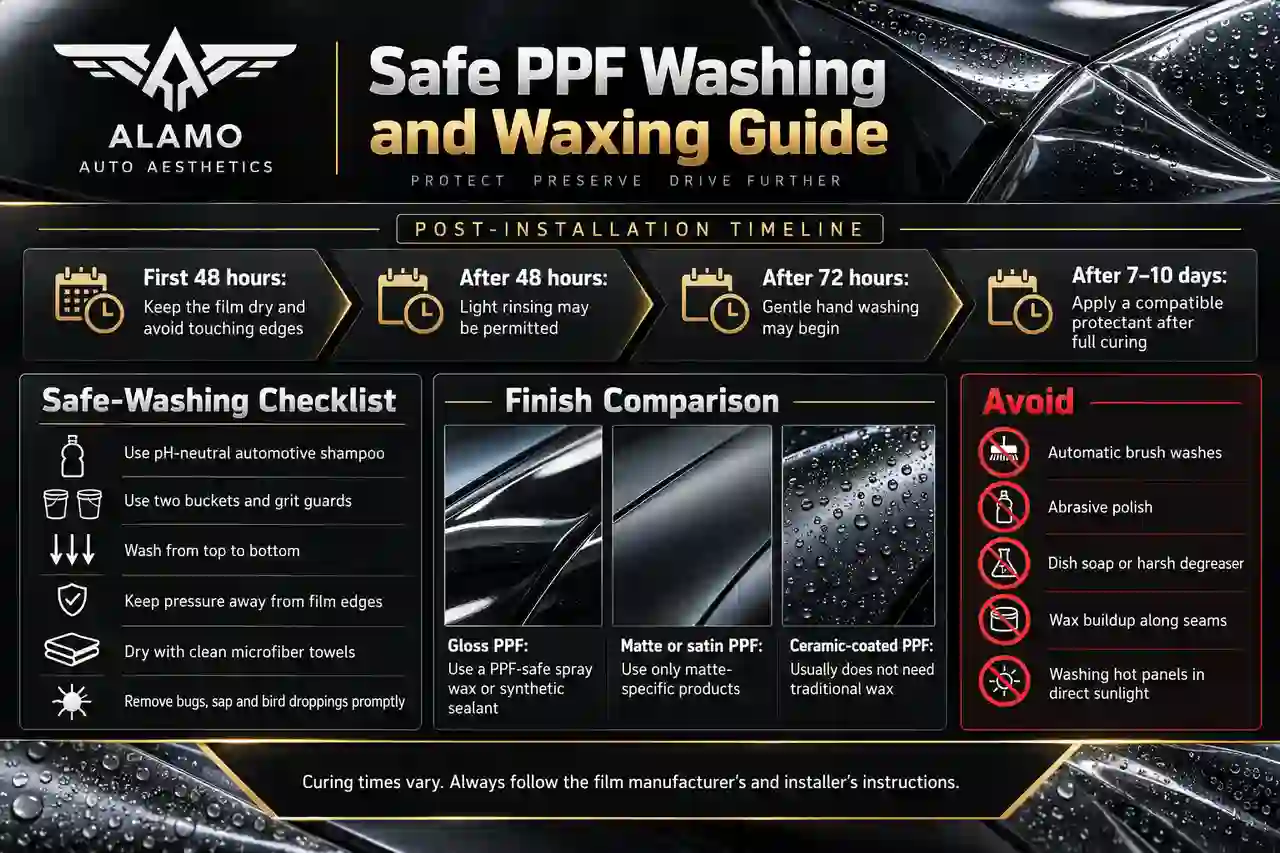
You can hand wash paint protection film within 48 to 72 hours of installation. You can wax it once it’s fully cured, usually after 7 to 10 days. Use pH-neutral car soap, a soft microfiber mitt, and the two-bucket method.
For waxing, choose a PPF-safe synthetic sealant or spray wax, not an abrasive paste wax.
Satin and matte finishes need different products than gloss PPF. Standard wax can leave a blotchy sheen on textured film. San Antonio’s hard water and strong UV exposure make rinse quality and drying technique even more important.
How Long to Wait Before Washing a Car With Paint Protection Film
Paint protection film needs time to fully bond with factory paint. It should not meet soap, water, or friction too soon. Most installers recommend waiting 48 hours before a light rinse and 72 hours before a full hand wash.
Alamo Auto Aesthetics tells every San Antonio customer to hold off on pressure washing or waxing for a full week. Rushing this window is the top cause of edge lifting on a fresh install. Water forced under a still-curing edge can loosen the bond before it fully sets.
This risk is highest near mirrors and door handles. Film that lifts this early usually points to warning signs of a poor PPF installation, not a washing mistake.
The Right Way to Wash a Car With PPF
What to Gather Before Washing
- pH-neutral car shampoo with no wax additives
- Two wash buckets fitted with grit guards
- A dedicated wheel mitt, separate from the body mitt
- A soft, high-pile microfiber wash mitt
- Waffle-weave microfiber drying towels
- A pressure washer under 1,900 PSI with a wide fan nozzle, if used
Step-by-Step Two-Bucket Wash
- Pre-rinse the entire car to loosen loose dirt and grit
- Wash the wheels first, using the dedicated wheel mitt and cleaner
- Wash the body top to bottom in straight, overlapping lines
- Dip the mitt in the rinse bucket between panels to remove grit
- Rinse the full car until no soap residue remains
- Dry with waffle-weave towels or a blower, working in one direction
What to Avoid When Washing PPF
Automatic brush car washes remain the biggest risk to film. Stiff bristles drag grit across panels and edges. Dish soap, degreasers, and hot water on a sun-warmed panel can also strip protective topcoats faster than expected.
Skipping the two-bucket method can also leave paint feeling rough after a wash. Dragged grit embeds into film the same way it does bare clear coat.
Can You Wax a Car With Paint Protection Film
Yes, you can wax paint protection film for extra gloss and a slicker, more hydrophobic surface. Wax is optional on modern PPF, since the film already blocks chips, stains, and most UV damage. Alamo Auto Aesthetics recommends a synthetic sealant or PPF-specific spray wax over a traditional carnauba paste.
Safe products include synthetic sealants, spray sealants, and ceramic boosters formulated for film. Avoid anything containing kerosene, naphtha, dyes, or abrasive polishing compounds. These can stain film or strip its topcoat over time.
Gloss PPF typically needs a sealant reapplied every 3 to 4 months. A full wax twice a year usually covers a daily driver. Film that already carries a ceramic coating rarely needs separate waxing on top.
How to Wax PPF the Right Way
Work in the shade on a cool panel, never in direct sun or on hot paint. Apply a thin coat of sealant or wax in small 2 by 2 foot sections.
Let it haze per the product’s instructions, usually 2 to 10 minutes. Buff each section with a clean microfiber towel using straight, overlapping strokes before moving on.
Keep wax and sealant off the film’s edges and seams. Buildup there creates a visible white line over time. Spray sealants are the easier and safer choice near edges, since they apply thin and need no heavy buffing pressure.
Caring for Satin and Matte PPF Finishes
Washing Satin and Matte PPF
The two-bucket method works the same on satin and matte film as it does on gloss. Never use a wax, polish, or clay bar with gloss-restoring additives. These leave a blotchy, uneven sheen on textured topcoats.
Products Built for Textured Film
- A matte-specific spray sealant, never a traditional paste wax
- pH-neutral soap with no added gloss enhancers
- A soft mitt only, with no scrubbing pressure on stains
- No clay bar treatment unless the product is labeled matte-safe
The textured topcoat is what changes between finishes, not the film’s underlying durability. How long paint protection film actually lasts depends far more on installation quality and UV exposure than on finish choice.
Washing a Car With PPF and Ceramic Coating Together
Many San Antonio drivers add a ceramic coating over PPF for extra hydrophobics and an easier wash. The two-bucket method still applies. Coated film beads and releases dirt faster, so washes can often stretch to every 3 weeks instead of 2.
Acidic wheel cleaners and dish soap strip the coating’s protective layer fast. Avoid both on coated film. Understanding how PPF and ceramic coating work together helps set the right wash schedule and product list from day one.
Common Washing and Waxing Mistakes That Damage PPF
Washing in direct sun or on a hot panel lets soap dry into streaks before you can rinse it clean. Scrubbing bug splatter or tar while it is still dry drags grit across the surface.
This can leave a fine, swirl-like haze on the film. Waxing straight over edges and seams is another common mistake that creates a visible buildup line.
| Category | Safe to Use | Avoid |
| Soap | pH-neutral, wax-free car shampoo | Dish soap, degreasers, harsh all-purpose cleaners |
| Wax or sealant | Synthetic sealant, spray wax, PPF-specific paste | Paste wax with dyes, kerosene, naphtha, or fillers |
| Tools | Soft microfiber mitt, waffle-weave towel, grit guards | Stiff brushes, chamois cloths, terry towels |
| Wheel care | Dedicated wheel mitt, pH-neutral wheel cleaner | Acidic wheel cleaner splashed onto film |
| Drying | Microfiber towel or blower, blotting motion | Air-drying in direct sun, dragging a dry towel |
Signs Your PPF Needs Professional Care
Yellowing, cloudiness, or hazy patches that do not clear after a proper wash usually point to sun damage. It can also signal a breakdown in the film’s topcoat.
Edges that lift, curl, or feel loose under a fingernail need attention before moisture and grit work underneath. A loss of water beading is another warning sign, especially alongside scratches that no longer self-heal in sunlight.
Any of these signs are worth a professional look before the damage spreads. Understanding PPF repair and replacement costs in San Antonio ahead of time makes that decision easier.
Water-Wise PPF Washing Tips for San Antonio Drivers
San Antonio moves through periodic drought stages that limit hose use and outdoor home washing. The two-bucket method already fits these rules well.
It uses far less water than a running hose and keeps wash time short. A quick pre-rinse, a focused wash, and one final rinse can cover a full vehicle. The total water used is a fraction of what a running hose takes.
During stricter drought stages, a certified WaterSaver car wash is often the better option. These facilities recycle wash water and meet strict per-vehicle limits. San Antonio Water System’s car wash guidelines outline exactly which local facilities and practices meet current conservation rules.
Keeping PPF Looking New in San Antonio
You can safely wash and wax paint protection film once it has fully cured. Stick to pH-neutral soap, the two-bucket method, and a PPF-safe sealant or wax. Match the product to the film’s finish, whether that is gloss, satin, or matte.
Alamo Auto Aesthetics installs and maintains paint protection film for drivers across San Antonio. Film that looks dull or discolored despite good care may be showing why some PPF starts yellowing over time. That is worth a quick look before it spreads further.
Frequently Asked Questions
How long after getting paint protection film installed can a car be washed in San Antonio?
Wait 48 hours before a light rinse and 72 hours before a full hand wash on newly installed paint protection film. Hold off on pressure washing or waxing for a full 7 days, giving the adhesive time to fully cure before it meets water pressure, wax, or any kind of scrubbing pressure.
Is satin finish PPF harder to wash than gloss PPF?
Satin PPF washes the same way as gloss PPF, using pH-neutral soap, a microfiber mitt, and the two-bucket method. The real difference is in the products used, not the technique. Skip any wax, polish, or clay treatment with gloss additives, since these leave a blotchy sheen on the textured topcoat.
Can paint protection film be waxed without ruining the finish?
Yes, you can safely wax gloss paint protection film using a synthetic sealant or PPF-specific spray wax applied in thin, even coats. Avoid paste waxes containing dyes, kerosene, or abrasive fillers. Skip wax entirely on matte and satin film, and use a matte-safe sealant instead.
How do you wash a car that has both PPF and a ceramic coating?
Use the same pH-neutral soap and two-bucket method you use on plain PPF, since the process doesn’t change. Ceramic-coated film sheds dirt and water faster, so washes can often stretch to every 3 weeks instead of 2. Avoid acidic wheel cleaners and dish soap, since both strip the hydrophobic layer.
Can a car with paint protection film go through an automatic car wash?
Touchless car washes are generally safe for paint protection film once it has fully cured, usually after 7 days. Avoid brush-style automatic washes permanently, since stiff bristles can snag film edges and cause fine scratching across gloss, satin, and matte finishes alike.
What happens if paint protection film gets washed too soon after installation?
Washing too soon, especially within the first 48 to 72 hours after installation, can loosen adhesive at the film’s edges before it fully bonds to the paint. This often shows up weeks later as lifting near mirrors, door handles, or rocker panels and usually requires a professional edge reseal.