Texas window tint laws set separate limits for front, rear, and windshield glass on vehicles driven daily in San Antonio. Front windows need 25% combined VLT, while rear side windows allow any darkness and rear glass uses a mirror condition. Alamo Auto Aesthetics helps drivers compare legal film choices before installation and understand important 2026 inspection changes across Bexar County.
Quick Answer: What Are the Texas Window Tint Limits?
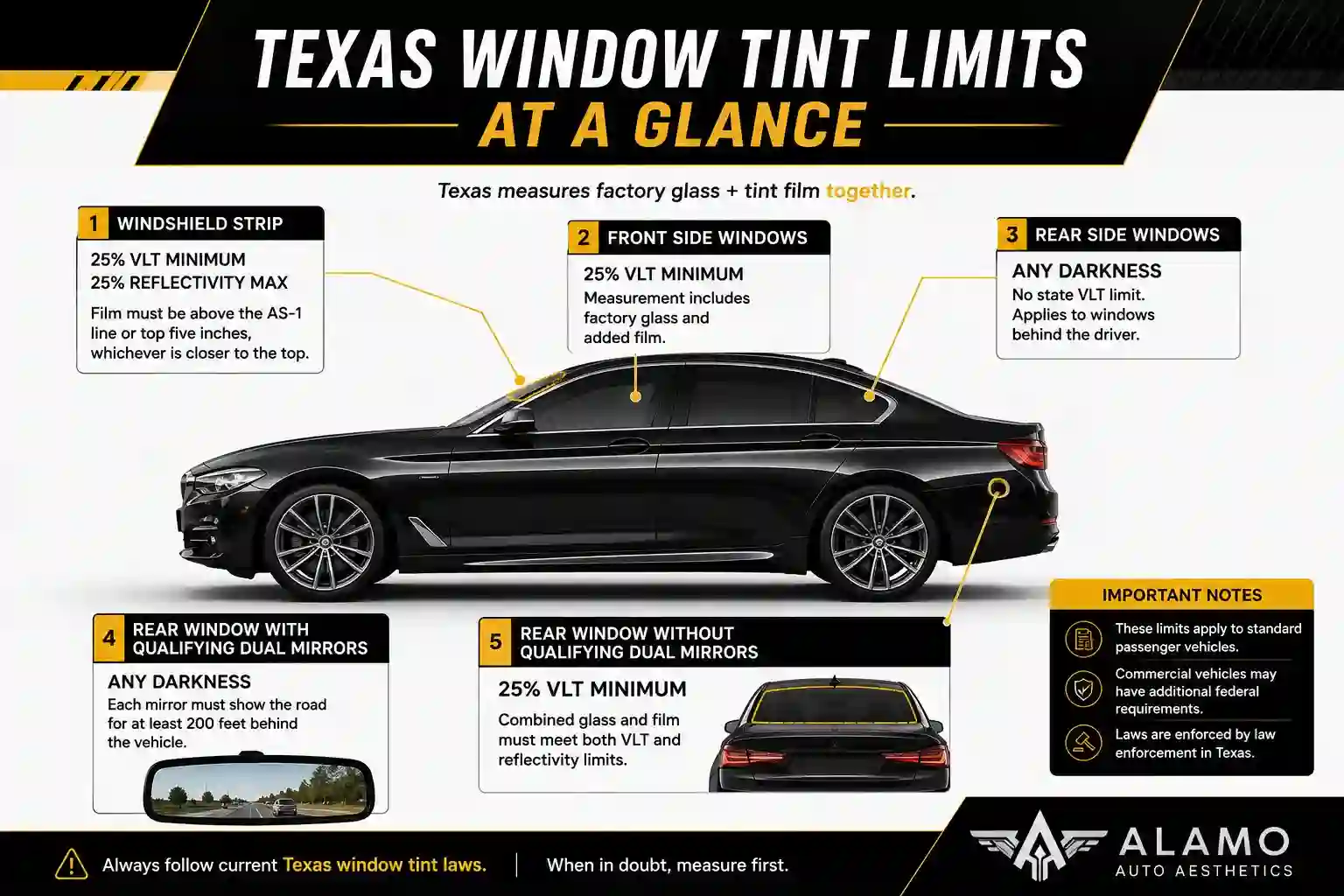
Texas regulates window position, combined visible light transmission, reflectivity, and certain windshield colors. The table below covers standard passenger vehicles.
| Window position | Minimum combined VLT | Maximum reflectivity | Main condition |
| Windshield tint strip | 25% | 25% | Film stays above the AS-1 line or top five inches, whichever is closer to the top |
| Front side windows | 25% | 25% | Measurement includes factory glass and added film |
| Rear side windows | No state darkness limit | Exempt under this rule | Applies to side windows behind the driver |
| Rear window with qualifying dual mirrors | No state darkness limit | Exempt under this rule | Each mirror must show the road for at least 200 feet behind the vehicle |
| Rear window without qualifying dual mirrors | 25% | 25% | Combined glass and film must meet both limits |
These limits follow window position, not marketing labels such as sedan, SUV, or truck. Commercial vehicles can face additional federal requirements.
What Does VLT Mean, and Why Does Combined VLT Matter?
Visible Light Transmission, or VLT, measures how much visible light passes through glass and film. A lower number creates a darker appearance. A 70% reading looks light, while 5% appears very dark.
Texas measures original glass and aftermarket film together. A film box does not state the final reading on a specific vehicle. For example, 70% glass combined with 35% film produces about 24.5% VLT.
That example falls below the 25% front-window threshold. Installers at Alamo Auto Aesthetics can meter existing glass before recommending a film. This step protects the legal margin and prevents guesses based on labels alone.
What Is the Darkest Legal Tint in Texas by Window?
The darkest legal option depends on the window’s location. Front glass carries strict limits because it affects the driver’s outward view. Glass behind the driver receives broader exemptions.
Front Side Windows
Windows immediately beside the driver must transmit at least 25% of visible light. Their luminous reflectance cannot exceed 25%. Both figures apply to the glass-and-film combination.
A film advertised as 25% will usually create a lower combined reading. Factory glass already reduces some light. A meter reading provides better guidance than a shade card.
Rear Side Windows
Texas exempts side windows behind the driver from its tint darkness standard. That exemption permits dark film on rear side glass for passenger vehicles.
Dark rear film can still reduce nighttime visibility. When selecting film, consider reversing, lane changes, rain, and poorly lit roads. Legal darkness does not always equal practical visibility.
Rear Window and the Dual-Mirror Rule
Rear glass may use any darkness when qualifying outside mirrors appear on both sides. Each mirror must show the highway for at least 200 feet behind the vehicle.
Without those mirrors, rear glass needs at least 25% combined VLT. It must also stay at or below 25% luminous reflectance. Damaged or obstructed mirrors can affect this exemption.
Can You Tint the Windshield in Texas?
Texas allows a visibly tinted strip only across the permitted upper windshield area. The strip needs at least 25% combined VLT and no more than 25% reflectance. Full-windshield colored tint below that area does not meet this rule.
AS-1 Line and Five-Inch Rule
The AS-1 mark usually appears near the upper edge of the windshield. Film cannot extend below that line or five inches from the top. Texas uses whichever boundary sits closer to the top.
This detail matters because some windshields place the AS-1 line higher than five inches. Experienced teams measure that boundary during window tinting in San Antonio. Alamo Auto Aesthetics also checks glass shape, sensors, and existing film before installation.
Clear, Untinted UV Film
Texas treats clear, untinted ultraviolet film differently from a colored sunscreening strip. Clear UV film may cover areas below the AS-1 line without a medical exemption.
Administrative rules limit how much that clear film may reduce visible light. Below the AS-1 line, total visible transmission cannot drop by more than 5%. Product selection and a final meter check remain important.
What Are the Texas Rules for Reflectivity and Tint Colors?
The windshield strip and front side windows cannot exceed 25% luminous reflectance. A rear window without qualifying dual mirrors follows the same maximum. Rear side windows receive the statutory exemption described earlier.
Red, blue, and amber sunscreening devices cannot appear on the windshield. Many websites apply that restriction to every window. Section 547.613 states it within the windshield exception.
Reflective appearance and heat rejection are different qualities. Modern films can reject substantial solar energy without a mirror-like surface. Drivers should compare performance data instead of judging heat control by darkness.
Does Texas Require a Window Tint Sticker?
Texas requires a compliance label for an installed sunscreening device. DPS calls for one label in the rearmost bottom corner of the driver’s-side window. A matching passenger-side label remains optional.
The required wording confirms compliance with Transportation Code Chapter 547. Installer information may appear, but Texas does not require that extra detail. Drivers should check label placement before leaving the shop.
Professional installers use glass measurements, film specifications, and installation records to support a compliant result. A label does not rescue film that meters below the legal limit.
How Does a Texas Medical Tint Exemption Work?
Texas provides a medical defense when direct sunlight creates a documented health need. A licensed physician or licensed optometrist must sign the statement. DPS does not issue separate exemption certificates.
The statement should identify the driver or passenger with reasonable detail. It must explain that sunscreening devices are medically necessary to protect that person’s health. Keep the signed document inside the vehicle.
A medical statement does not create one universal VLT percentage. It also does not replace safe visibility or correct documentation. Drivers should discuss the needed protection with the medical provider and installer.
What Happens When Window Tint Is Illegal in Texas?
An officer may use a tint meter during a lawful traffic stop. The meter measures glass and film together. A reading below 25% on either front side window can support a citation.
Operating a vehicle with noncompliant material is a misdemeanor under Section 547.613. Texas uses a general $1 to $200 fine range when no other penalty applies. State traffic fines and court costs can increase the total.
Correction can also require film removal and replacement. Continuing to drive may create another enforcement encounter. Unsupported claims about automatic insurance penalties should not guide a tint decision.
Does Texas Still Inspect Window Tint in 2026?
Most noncommercial vehicles no longer need annual safety inspections as of January 1, 2025. Registration now includes an inspection program replacement fee. Commercial vehicles still need safety inspections and can face separate federal glazing rules.
Removing the passenger safety inspection did not repeal Texas window tint laws. Police can still measure suspected illegal film during traffic enforcement. A registration renewal does not certify tint compliance.
What Bexar County Drivers Should Know for November 2026
Bexar County begins emissions inspections on November 1, 2026. Covered gasoline vehicles from two through 24 model years need the emissions test. That process checks emissions systems, not the former statewide safety list.
The new local program does not create a tint inspection for standard passenger vehicles. It also does not make dark front film lawful. Tint enforcement remains separate from emissions registration requirements.
How to Choose a Legal Tint Shade in San Antonio
Start with a meter reading on clean, untreated glass. The result shows how much light the factory glass already blocks. An installer can then calculate a film choice with a reasonable legal margin.
Front windows need practical nighttime visibility as well as legal VLT. Rear coverage should account for mirror condition and regular driving routes. A dedicated guide to choosing the right tint shade explains those comfort and visibility tradeoffs.
Film technology also matters. Ceramic and other high-performance products can control heat without relying only on dark shades. Product data should identify visible transmission, solar performance, and manufacturer certification.
Where Can Drivers Confirm Current Texas Tint Requirements?
Texas law can change, and official sources are the authority. The Texas window tint standards explain windshield, side-window, rear-window, medical, and label requirements. Drivers should verify current rules before installing or replacing film.
Conclusion
Texas requires 25% combined VLT on front side windows, while rear side windows have no state darkness limit. Rear glass needs qualifying dual mirrors for unrestricted darkness. Windshield strips must follow the AS-1 or five-inch boundary.
Accurate measurement matters more than the percentage printed on a film sample. Alamo Auto Aesthetics can explain legal options and expected performance. The related window tint cost in San Antonio guide can help drivers plan the next step.
Frequently Asked Questions
What is the darkest legal tint for front and rear windows in Texas?
Texas requires at least 25% combined VLT on both front side windows. Rear side windows may use any darkness. Rear glass may also be any darkness if you have outside mirrors on both sides. Those mirrors must show at least 200 feet behind the vehicle. A meter should confirm every front installation.
Is 20% window tint legal on the front side windows in Texas?
No. A 20% combined VLT reading falls below Texas’s 25% minimum for windows immediately beside the driver. Film marked 25% can also meter lower after installation because factory glass reduces light. Measure the glass-and-film combination before selecting a shade. A meter confirms the final result.
Is 5% limo tint legal anywhere on a passenger vehicle in Texas?
Yes, 5% film can be legal on rear side windows. It can also appear on rear glass with qualifying outside mirrors on both sides. Those mirrors must show at least 200 feet behind the vehicle. Front side use requires a valid medical reason and documentation. A meter should confirm placement.
Can clear ceramic film cover the full windshield under Texas law?
Clear, untinted UV film may cover the full windshield without a medical exemption. Film below the AS-1 line cannot reduce total visible light transmission by more than 5%. A visibly tinted strip must remain above the AS-1 line or within the upper five inches. A meter should verify the final result.
Does Texas still check passenger window tint during annual inspections in 2026?
Most noncommercial Texas vehicles no longer receive annual safety inspections. That change began January 1, 2025. Officers can still meter suspected illegal tint during traffic stops. Commercial vehicles continue to face safety inspections and other glazing standards. Registration cannot test tint.
What paperwork does Texas require for a medical window tint exemption?
Texas requires a signed statement from a licensed physician or optometrist. It should identify the protected driver or passenger and explain why darker film safeguards that person’s health. Keep the statement inside the vehicle because DPS no longer issues exemption certificates.