Quick Answer
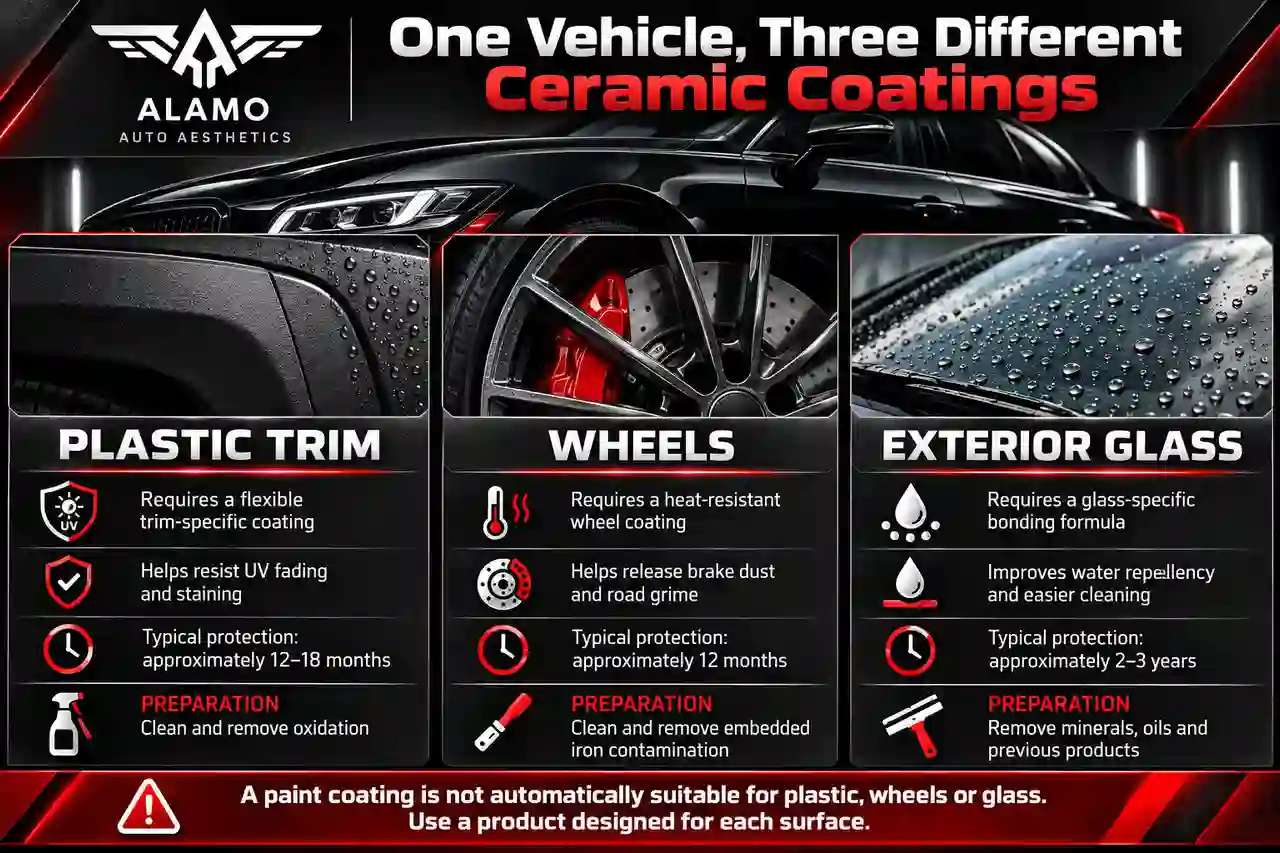
Yes, you can apply ceramic coating to plastic trim, wheels, and glass, but each surface requires a specific formulation. Paint-grade ceramic coatings are designed for clear coat and should not be used interchangeably on all surfaces. Trim-specific coatings withstand flexibility and restore faded plastic with 4H hardness and protection up to 24 months. Wheel coatings resist temperatures up to 350°C (662°F) from brake heat. Glass coatings bond differently to non-porous surfaces and prevent wiper chatter that generic coatings cause. Using the correct coating for each surface ensures proper bonding, longevity, and performance.
Vehicle owners exploring ceramic coating options often wonder if this protection extends beyond paint. Modern vehicles feature extensive plastic trim, alloy wheels, and glass surfaces that all face environmental damage. The good news is ceramic coating technology isn’t limited to painted panels.
The critical factor is understanding that different surfaces have different molecular structures, temperatures, and flexibility requirements. This guide breaks down exactly how ceramic coating works on plastic trim, wheels, and glass, what products to use, and why surface-specific formulations matter.
Understanding Ceramic Coating Chemistry for Different Surfaces
Ceramic coating consists primarily of silicon dioxide (SiO2), also called silica or quartz. When applied, these nano-particles create a chemical bond with the surface, forming a protective layer typically 2 to 7 microns thick.
Why One Coating Doesn’t Fit All Surfaces
Molecular Bonding Differences:
Paint and clear coat have a porous, slightly flexible surface that allows SiO2 particles to penetrate and bond mechanically and chemically.
Glass is non-porous and extremely hard. Coatings designed for paint don’t bond as effectively because glass lacks the microscopic texture that mechanical bonding requires.
Plastic trim, especially textured black trim, is semi-flexible and can expand and contract with temperature changes. Rigid paint coatings can crack or delaminate on flexible surfaces.
Wheels endure extreme temperatures from brake systems, sometimes exceeding 350°C (662°F) during hard braking. Standard paint coatings aren’t formulated to withstand this heat.
Surface-Specific Formulations
Paint Coatings:
- Hardness: 9H on pencil hardness scale
- Thickness: 2 to 4 microns
- Flexibility: Minimal, designed for rigid surfaces
- Heat resistance: Up to 500°F
Trim Coatings:
- Hardness: 4H (less rigid to accommodate flexibility)
- Thickness: 5 to 7 microns
- Flexibility: High, designed for textured, semi-flexible plastics
- Heat resistance: Up to 500°F
- Additional properties: Color restoration for faded plastic
Wheel Coatings:
- Hardness: 9H
- Thickness: 2 to 4 microns
- Flexibility: Minimal
- Heat resistance: Up to 1000°F (some formulations)
- Additional properties: Enhanced resistance to brake dust
Glass Coatings:
- Hardness: 9H
- Thickness: 1 to 3 microns (thinner for optical clarity)
- Flexibility: Minimal
- Heat resistance: Up to 500°F
- Additional properties: Formulated to prevent wiper blade interference
Ceramic Coating for Plastic Trim
Plastic trim includes bumpers, side moldings, mirror housings, door handles, windshield cowls, fender flares, and bed rails on trucks.
Why Plastic Trim Needs Protection
UV Damage: Prolonged sun exposure breaks down plastic polymers, causing fading and that characteristic gray or chalky appearance.
Oxidation: Exposure to oxygen and environmental contaminants creates a dull, lifeless finish.
Staining: Road tar, tree sap, and other contaminants bond to unprotected plastic, creating permanent discoloration.
Cracking: Dried, damaged plastic becomes brittle and develops surface cracks.
Can You Use Paint Coating on Plastic Trim?
Technically yes, but it’s not ideal. Paint-grade ceramic coatings will bond to hard, smooth plastic surfaces like smooth bumpers, mirror housings, and glossy trim pieces.
Problems with Paint Coatings on Plastic:
Too rigid: Paint coatings are formulated for inflexible clear coat. When applied to semi-flexible plastic that expands and contracts with temperature, the coating can crack or peel.
Wrong finish: Paint coatings create a high-gloss finish. Most textured black trim looks unnatural with excessive gloss.
No color restoration: Paint coatings are transparent and add no pigment. They preserve whatever condition the plastic is in but won’t restore faded trim.
Poor penetration on textured surfaces: Paint coatings don’t adequately penetrate the valleys and texture of rougher plastic, leading to uneven protection.
Trim-Specific Ceramic Coating Benefits
Proper trim coatings deliver specific advantages:
Color Restoration: Trim coatings contain mild pigments or oils that restore the deep black color of faded plastic. This isn’t a temporary dressing that washes off but a bonded layer that maintains color.
Satin Finish: Instead of high gloss, trim coatings provide a natural satin finish that matches factory appearance.
Flexibility: Formulated with slightly more elastic properties to accommodate plastic movement without cracking.
UV Protection: Specialized UV inhibitors prevent future fading. Protection typically lasts 18 to 24 months.
Hydrophobic Properties: Water and contaminants bead off, making trim easier to clean and preventing staining.
Application Process for Plastic Trim
Surface Preparation:
- Cleaning: Wash trim thoroughly with degreaser or all-purpose cleaner to remove oils, waxes, and contaminants.
- Decontamination: For heavily contaminated trim, use a clay bar to remove bonded particles.
- Restoration (if needed): If the plastic is severely faded, consider using a plastic restorer or light compound before coating. This removes the damaged oxidized layer.
- Panel Wipe: Use isopropyl alcohol (IPA) diluted 1:1 with distilled water to remove any remaining residue. This ensures proper coating adhesion.
Application Technique:
Apply 2 to 3 drops of trim coating to a microfiber applicator or included sponge. Work in small sections, approximately 12 x 12 inches at a time.
For Textured Trim: Apply using a back-and-forth motion, working the coating into all texture and crevices. Do not wipe off on textured surfaces. Apply evenly and leave to cure. The coating will self-level in the texture.
For Smooth Trim: Apply a thin, even layer. After 1 to 2 minutes, when the coating begins to flash (appears slightly hazy), buff gently with a clean microfiber towel. This creates a thinner layer that still provides protection but without excessive buildup on smooth surfaces.
Curing Time: Avoid moisture exposure for 12 hours minimum. Wait 48 hours before washing the vehicle.
Which Trim Pieces to Coat
Best Candidates:
- Black plastic bumpers and fender flares
- Side molding and door trim
- Mirror housings (unpainted)
- Windshield cowls
- Bed rails and tonneau cover frames
- Engine bay plastics
- Roof racks
- Running boards (avoid step surfaces, as coating creates slippery surface)
Avoid Coating:
- Step bars or walking surfaces (creates dangerous slippery condition)
- Heavily cracked or damaged plastic (coating won’t repair structural damage)
- Interior plastics (trim coatings are designed for exterior use only)
Trim Coating Longevity
With proper application and maintenance:
- Expected protection: 18 to 24 months
- Maintained appearance: 12 to 18 months before color restoration begins to fade
- Reapplication: Can be reapplied when UV protection diminishes
Ceramic Coating for Wheels
Wheels face some of the harshest conditions on your vehicle: extreme temperatures, corrosive brake dust, road salt, tar, and constant bombardment from road debris.
Why Wheels Need Specialized Coating
Brake Dust: Comprised of carbon fibers, adhesives, and metal particles that stick aggressively to wheel surfaces. Contains iron particles that embed into pores and cause staining and corrosion.
High Temperatures: During heavy braking, wheels can reach 350 to 600°F. Track use or performance driving can push temperatures even higher.
Diverse Materials: Modern wheels come in painted finishes, powder coating, polished aluminum, chrome, machined surfaces, and bare metal. Each requires slightly different treatment.
Time-Consuming Cleaning: Intricate wheel designs with spokes, vents, and tight spaces make thorough cleaning labor-intensive without protection.
Heat Resistance Requirements
Standard paint ceramic coatings typically withstand up to 500°F. This is insufficient for wheels.
Wheel-Specific Coatings Heat Tolerance:
- Consumer-grade wheel coatings: Up to 750°F
- Professional-grade wheel coatings: Up to 1000°F
- Duration tested: Several hours at peak temperature
This heat resistance prevents coating breakdown, yellowing, or delamination from brake system heat.
Can You Use Paint Coating on Wheels?
Professional ceramic coatings formulated for automotive paint will work on wheels for normal street driving where brake temperatures stay moderate.
When Paint Coating Works on Wheels:
- Standard daily driving conditions
- Wheels on vehicles with moderate brake temperatures
- Wheels on the rear axle (typically cooler than front wheels)
When You Need Wheel-Specific Coating:
- Performance vehicles with high-performance brake systems
- Vehicles used for spirited driving or track days
- Heavy vehicles (trucks, SUVs) that generate significant brake heat
- Front wheels on any vehicle (front brakes generate most heat)
The consequences of using inadequate coating are yellowing, hazing, or complete coating failure within a few months.
Wheel Coating Benefits
Brake Dust Resistance: The hydrophobic and oleophobic properties prevent brake dust from bonding strongly to the wheel surface. Weekly washing becomes significantly easier, often requiring only a pH-neutral wash without aggressive wheel cleaners.
Corrosion Protection: Creates a barrier between the wheel finish and corrosive elements like road salt, preventing pitting and oxidation on bare metal or polished finishes.
Enhanced Appearance: Adds depth and gloss to painted or powder-coated wheels. Enhances reflectivity on polished or machined finishes.
Cleaning Time Reduction: Coated wheels can be cleaned in approximately 50% less time compared to uncoated wheels, according to detailer estimates. Contaminants rinse off with less agitation.
Protection for Expensive Wheels: Custom wheels represent significant investment, often $2,000 to $10,000+ per set. Coating protection makes sense economically.
Application Process for Wheels
Removal vs. On-Car Application:
Best Practice: Remove wheels from vehicle. This allows access to the inner barrel, center cap area, and behind spokes where brake dust accumulates heavily.
Alternative: Coating can be applied with wheels on the car, but you’ll miss approximately 40% of the wheel surface, including areas most exposed to brake dust.
Preparation Steps:
- Deep Cleaning: Use dedicated wheel cleaner to remove all brake dust, tar, and road grime. Pay special attention to tight spaces and textured areas.
- Iron Decontamination: Apply iron remover (turns purple when reacting with iron particles). This chemically dissolves embedded brake dust that washing doesn’t remove.
- Clay Bar Treatment: Use automotive clay to remove bonded contaminants from the wheel surface.
- Polish (If Needed): If wheels have water spots, light oxidation, or minor scratches, polish before coating. Coating will lock in whatever condition exists.
- Panel Wipe: Use IPA solution to remove all oils, including from polishing. This is critical for proper coating adhesion.
Application Method:
Apply 10 to 15 drops of wheel coating to an applicator pad. Work systematically from left to right, top to bottom on each wheel section.
Apply coating to all surfaces: face, spokes, barrel (inner portion), and lip. Work in sections small enough to manage before the coating begins to cure.
Watch for “sweating” after 2 to 5 minutes. This appears as coating beading up on the surface, indicating the chemical curing process is complete. Wipe this residue away with a clean microfiber towel.
Buff the entire wheel with a second clean towel to remove any remaining residue and achieve uniform appearance.
Inspect with a flashlight to identify any missed spots or uneven areas. Touch up as needed.
Curing Requirements:
Do not expose wheels to water for 24 hours minimum. This means no driving if rain is expected.
Wait 48 hours for full cure before washing the vehicle.
Which Wheel Finishes Can Be Coated
Ceramic coating works on virtually all wheel finishes:
| Wheel Finish | Coating Compatibility | Special Considerations |
| Painted | Excellent | Standard application, polish first if oxidized |
| Powder Coated | Excellent | Ensure coating is fully cured (wait 30 days on new coating) |
| Polished Aluminum | Excellent | May require more frequent reapplication due to heat |
| Chrome | Good | Works well, but chrome plating itself is durable |
| Machined Face | Excellent | Coating prevents oxidation on exposed aluminum |
| Bare Aluminum | Excellent | Prevents oxidation and tarnishing |
| Matte/Satin | Use with Caution | May alter finish appearance, test inconspicuous area first |
Avoid Coating:
- Brake rotors (creates dangerous reduction in braking performance)
- Lug nut seating surfaces (can affect torque specifications)
- Center cap logos if removable (difficult to apply evenly on intricate designs)
Wheel Coating Longevity
Durability depends heavily on driving conditions:
Street Driving: 2 to 3 years with proper maintenance Performance Driving: 12 to 18 months due to higher brake temperatures Winter Conditions (salt exposure): 18 to 24 months Track Use: 6 to 12 months, reapplication needed more frequently
Ceramic Coating for Glass
Glass coating, particularly on windshields, has become increasingly popular for the dramatic improvement in rain visibility and reduced need for windshield wipers.
Why Glass Coating Is Different
Glass presents unique challenges that paint doesn’t:
Non-Porous Surface: Glass has no texture at the microscopic level like paint’s clear coat. Coating must bond through chemical adhesion rather than mechanical interlocking.
Optical Requirements: Any coating on glass must maintain perfect transparency. Even slight hazing or streaking is unacceptable.
Wiper Blade Interaction: Windshield wipers move across coated glass thousands of times. The coating must not create chatter, skipping, or resistance.
Temperature Cycling: Glass surfaces, especially windshields, experience rapid temperature changes from defrosters, sun exposure, and external weather.
Problems with Using Paint Coating on Glass
Generic or paint-specific ceramic coatings cause several issues on glass:
Wiper Blade Chatter: The most common complaint. Paint coatings create a surface that causes wiper blades to skip or judder instead of gliding smoothly. This is both annoying and dangerous during heavy rain.
Streaking: Improper bonding or application on glass leaves visible streaks that create glare and reduce visibility, especially with oncoming headlights at night.
Hazing: Some paint coatings leave a slight haze on glass that isn’t visible on painted surfaces but becomes obvious on transparent glass.
Poor Longevity: Coatings not formulated for glass bond weakly and fail within weeks, especially under wiper blade abrasion.
Glass-Specific Coating Benefits
Improved Rain Visibility: Water beads up into tight droplets and rolls off at speeds as low as 30 to 40 mph. Visibility improves dramatically in moderate to heavy rain.
Reduced Wiper Use: Many drivers report using wipers 50 to 70% less frequently after glass coating. At highway speeds, water often blows off without wipers.
Easier Ice and Snow Removal: Ice doesn’t bond as strongly to coated glass. Light frost can often be removed with wipers alone. Snow slides off more easily.
Bug Splatter Cleanup: Insects don’t adhere as firmly. Most can be removed with glass cleaner and minimal scrubbing rather than requiring bug remover.
Reduced Water Spotting: Mineral deposits from hard water don’t etch into coated glass as readily, preventing permanent spotting.
Glare Reduction: Some glass coatings include anti-glare properties that reduce reflection and improve night driving visibility.
Application Process for Glass
Preparation is Critical:
- Thorough Washing: Clean all glass with automotive glass cleaner to remove dirt, oils, and old wiper blade residue.
- Clay Bar Treatment: Clay the glass to remove bonded contaminants, especially tar, tree sap, and industrial fallout. These prevent proper coating adhesion.
- Polish (If Needed): If glass has water spots or light scratches, use a glass polish with a soft pad before coating. This creates the smoothest possible surface.
- Final Cleaning: Use dedicated glass cleaner or IPA solution to remove all traces of polish, oils, and residue.
- Inspection: Examine glass in bright light or sunlight. Any remaining contamination will be locked under the coating.
Application Technique:
Work indoors or in a shaded area with temperatures between 60 to 75°F. Direct sunlight causes coating to cure too quickly.
Apply small amount of glass coating (typically 5 to 10 drops) to a microfiber applicator or included sponge.
Work in small sections, approximately 2 x 2 feet. Glass coating tends to cure faster than paint coating.
Apply in straight, overlapping lines. Avoid circular motions which can create swirl marks visible in certain lighting.
Watch for flashing (coating begins to haze). This typically occurs within 30 to 60 seconds on glass.
Immediately buff with a clean, lint-free microfiber towel. Use straight wiping motions.
Inspect from multiple angles and in different lighting conditions to ensure no streaks remain.
Windshield-Specific Considerations:
Apply coating only to the outer surface of the windshield, never the interior.
Avoid coating windshield wiper rest area if you want to coat the blades themselves (prevents double coating).
Some installers coat windshield wiper blades with the same coating for enhanced water shedding.
Curing Requirements:
Allow 12 to 24 hours before water exposure. Move the vehicle into sunlight if possible, as UV exposure helps curing.
Wait 48 hours before using windshield washers or running wipers.
Which Glass Surfaces to Coat
Highly Recommended:
- Front windshield (primary benefit area)
- Side windows (improves visibility during lane changes in rain)
- Rear window (backup visibility improvement)
Optional:
- Sunroof glass
- Headlight lenses (technically polycarbonate plastic, but glass coating works)
- Side mirrors (significant benefit for visibility)
Avoid:
- Interior glass (unnecessary and can create cabin glare)
- Already tinted windows until checking with installer (some window tints may react with certain coatings)
Glass Coating Longevity
Windshield: 6 to 12 months with normal wiper use Side Windows: 12 to 18 months (less wiper abrasion) Rear Window: 12 to 18 months Professional Grade Coatings: Up to 24 months on windshield
Longevity depends heavily on wiper blade quality and frequency of use. Worn wiper blades with torn rubber accelerate coating wear.
Comparison: Surface-Specific Ceramic Coating Properties
| Property | Paint Coating | Trim Coating | Wheel Coating | Glass Coating |
| SiO2 Content | 70-80% | 60-70% | 70-85% | 80-90% |
| Hardness | 9H | 4H | 9H | 9H |
| Thickness | 2-4 microns | 5-7 microns | 2-4 microns | 1-3 microns |
| Heat Resistance | 500°F | 500°F | 750-1000°F | 500°F |
| Flexibility | Low | High | Low | Low |
| Typical Longevity | 2-5 years | 18-24 months | 2-3 years | 6-12 months |
| Primary Benefit | Paint protection | Color restoration | Brake dust resistance | Rain visibility |
| Special Features | High gloss | Satin finish, pigmented | Extreme heat tolerance | Anti-glare, optical clarity |
Common Mistakes When Coating Different Surfaces
Using Wrong Products
Mistake: Applying high-gloss paint coating to textured black plastic trim.
Result: Unnatural, overly glossy appearance that looks like plastic dressing.
Solution: Use trim-specific coating with satin finish.
Mistake: Using standard paint coating on performance vehicle wheels.
Result: Coating yellows or fails within months from brake heat.
Solution: Invest in wheel-specific coating rated for high temperatures.
Mistake: Coating windshield with leftover paint coating.
Result: Wiper blade chatter and streaking.
Solution: Purchase glass-specific coating or have professional application.
Inadequate Surface Preparation
For Plastic Trim: Failing to remove oxidation before coating seals in the faded appearance. Always restore color first if needed.
For Wheels: Skipping iron decontamination leaves embedded brake dust that prevents proper bonding. The coating will fail prematurely in these areas.
For Glass: Not removing water spots creates a permanently spotted appearance under the coating. Polish glass first if spotting exists.
Application Timing Errors
Mistake: Applying too much product and letting it cure before buffing.
Result: High spots, streaking, or uneven appearance.
Solution: Work in smaller sections, watch for flashing, buff promptly.
Mistake: Applying coating in direct sunlight or extreme temperatures.
Result: Coating cures too quickly, making proper leveling impossible.
Solution: Work in controlled environment between 60 to 75°F.
Curing Time Violations
Mistake: Washing vehicle or exposing to rain before full cure. Result: Coating washes away partially or develops permanent water spots. Solution: Wait minimum 48 hours, ideally 7 days for full cure.
Maintenance for Coated Surfaces
Each surface type requires specific maintenance to maximize coating longevity.
Maintaining Coated Plastic Trim
Washing: Use pH-neutral car soap. Avoid harsh degreasers or all-purpose cleaners on coated trim as they accelerate coating degradation.
Drying: Gently pat dry with microfiber towel. Don’t scrub aggressively on textured surfaces.
Avoid: Solvent-based tire dressings that contact trim. These can dissolve coating over time.
Inspection: Check every 3 to 6 months for fading. When UV protection diminishes and color begins to fade, reapply coating.
Maintaining Coated Wheels
Weekly Washing: Rinse wheels thoroughly during each car wash. The hydrophobic properties work best when contaminants don’t sit for extended periods.
pH-Neutral Soap: Avoid acidic wheel cleaners unless absolutely necessary for heavy brake dust. Acids accelerate coating breakdown.
Soft Brushes: Use dedicated wheel brushes with soft bristles. Avoid abrasive scrubbing that can wear coating.
Immediate Contamination Removal: Remove tar, brake dust buildup, or industrial fallout promptly. Don’t let it sit for weeks.
Periodic Boost: Every 3 to 6 months, apply a ceramic boost spray designed for coated surfaces. This refreshes hydrophobic properties.
Annual Inspection: Check coating condition annually. If water beading diminishes significantly or brake dust starts sticking, consider reapplication.
Maintaining Coated Glass
Proper Wiper Blades: Replace wiper blades every 6 to 12 months. Worn blades with torn rubber accelerate coating wear and reduce effectiveness.
Quality Washer Fluid: Use washer fluid designed for coated glass if available. Avoid harsh ammonia-based cleaners.
Regular Cleaning: Clean glass weekly to prevent buildup that can embed into coating. Use microfiber towels, never paper towels.
Bug Removal: Remove bug splatter within 24 to 48 hours. Acidic insect residue can etch into coating if left too long.
Avoid Abrasives: Never use razor blades or abrasive pads on coated glass. These will strip the coating.
Reapplication Timing: When you notice water no longer beads or sheets effectively, reapply coating. Don’t wait for complete failure.
Professional vs. DIY Application
When Professional Application Makes Sense
Complex Surfaces: Wheels with intricate designs, multiple trim pieces, or full vehicle glass coating benefit from professional experience and tools.
High-Value Vehicles: On luxury or exotic vehicles, professional application ensures proper results without risk of DIY errors.
Surface-Specific Expertise: Professionals have access to commercial-grade products not available to consumers and understand nuances of different formulations.
Warranty Coverage: Professional applications typically include warranties covering product failure or application errors.
Time Constraints: Full vehicle coating including paint, trim, wheels, and glass can require 8 to 12 hours. Professionals have efficient systems and experience.
When DIY Application Works
Single Surface Type: Coating just wheels or just trim is manageable for careful DIY enthusiasts.
Previous Experience: If you’ve successfully applied paint coating, wheel or trim coating uses similar techniques.
Proper Environment: You have a clean, temperature-controlled space for application and curing.
Quality Products: You’re willing to invest in surface-specific products rather than generic “all-in-one” solutions.
Patience and Attention: You can work methodically in small sections and follow instructions precisely.
Special Considerations for San Antonio Climate
San Antonio’s climate presents specific challenges that make surface protection particularly valuable.
UV Exposure
San Antonio receives approximately 220 days of sunshine annually. This intense UV exposure accelerates plastic trim fading and oxidation.
Protection Priority: Plastic trim coating becomes essential rather than optional. Unprotected black trim fades to gray within 18 to 24 months in Texas sun.
Reapplication Frequency: Expect to reapply trim coating every 12 to 18 months in San Antonio, versus 18 to 24 months in less sunny climates.
Summer Heat
Summer temperatures regularly exceed 95°F, with surfaces reaching much higher temperatures in direct sun.
Wheel Coating Benefits: Brake systems already run hot. Add summer heat and wheel surfaces can exceed 400°F. Heat-resistant wheel coating is necessary, not optional.
Glass Coating Value: Coated windshields help interior temperatures by improving water shedding. This allows air conditioning to work more efficiently during summer rain.
Dust and Pollen
Central Texas experiences significant airborne particulates, especially during spring and fall.
Hydrophobic Advantage: Coated surfaces repel dust and pollen more effectively. Weekly rinsing removes most contamination without aggressive scrubbing.
Road Conditions
San Antonio’s road infrastructure includes construction zones, unpaved areas, and highways with significant truck traffic kicking up debris.
Wheel Protection Priority: Road debris and construction dust create aggressive wheel contamination. Coating protection prevents permanent staining and pitting.
Cost Considerations for Multi-Surface Coating
While we don’t discuss specific pricing, understanding relative costs helps with budgeting and decision-making.
Product Cost Factors
Paint Coating: Typically the most expensive per milliliter because it’s designed for the largest surface area (entire vehicle body).
Wheel Coating: Often mid-range pricing. You need less product (covering 4 wheels versus entire car), but formulation is specialized for heat resistance.
Trim Coating: Generally most economical. Small surface area, and bottles typically contain enough for 2 to 3 full vehicle applications.
Glass Coating: Variable pricing. Basic consumer products are affordable, but professional-grade glass coatings can approach paint coating prices.
Application Cost Factors (Professional Services)
Labor Time Comparison:
- Wheels (removed): 3 to 5 hours (cleaning, decontamination, coating, reassembly)
- Plastic trim: 2 to 3 hours (depends on amount of trim and restoration needed)
- Glass: 1 to 2 hours (preparation is time-intensive)
- Full vehicle (paint, trim, wheels, glass): 8 to 15 hours total
Preparation Intensity: Wheels require the most intensive prep work (removal, deep cleaning, iron decon, polishing). This increases professional service cost.
Value Assessment
Cost Per Year of Protection:
- Wheels: Medium initial cost, 2 to 3 year protection = good value
- Trim: Low initial cost, 18 to 24 month protection = excellent value
- Glass: Low to medium initial cost, 6 to 12 month protection = moderate value (but high functional benefit)
Comparative Options:
- Unprotected plastic trim requires replacement at 3 to 5 years = expensive
- Coated plastic trim maintains appearance for 5 to 10+ years = saves replacement cost
- Wheels without protection require intensive cleaning every wash = time cost
- Coated wheels reduce cleaning time by approximately 50% = time savings value
Making the Decision: What to Coat First
If you’re not coating everything at once, prioritize based on your specific needs.
Priority 1: Plastic Trim (If Fading)
If your black plastic trim shows fading, graying, or chalky appearance, this should be first priority.
Why: Fading accelerates once started. Coating now preserves remaining color and prevents further degradation. Waiting means more extensive restoration or replacement needed.
Visual Impact: Fresh, restored black trim dramatically improves vehicle appearance, often more noticeably than freshly washed paint.
Priority 2: Wheels
Wheels should be second priority, especially if you have high-end wheels or find wheel cleaning tedious.
Why: Brake dust causes permanent damage if left long enough. Protection now prevents corrosion and pitting that can’t be reversed.
Time Savings: If you spend 30 to 45 minutes per wheel cleaning session, coating reduces this to 10 to 15 minutes. Over a year, this saves significant time.
Priority 3: Windshield and Glass
Glass coating delivers immediate functional benefit but requires more frequent reapplication.
Why: Improved rain visibility enhances safety. This matters more in areas with frequent rain, but even in San Antonio’s occasional heavy storms, the benefit is noticeable.
Consideration: If you rarely drive in rain, glass coating provides less value than trim or wheel protection.
Bottom Line: Surface-Specific Coatings Are Worth It
The answer to “Can you apply ceramic coating to plastic trim, wheels, or glass?” is definitely yes, but success requires using the right product for each surface.
Key Takeaways:
Paint-grade ceramic coating should stay on paint and clear coat. While it will technically bond to other surfaces, results will be suboptimal.
Trim-specific coatings restore color, provide appropriate flexibility, and deliver the satin finish black plastic requires.
Wheel coatings withstand extreme brake temperatures that would destroy paint coatings. The heat resistance difference (500°F vs. 1000°F) matters significantly.